
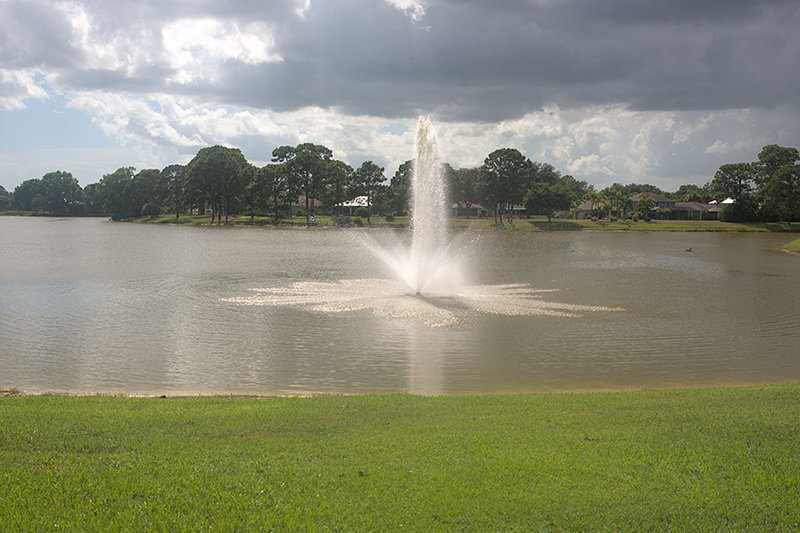
Extensive cleanup efforts will come to the Sawgrass Lakes gated community in central Port St. Lucie over the next three years after two staggering fish kills there since August.
At their June 22 meeting, the Port St. Lucie City Council approved a $1.35 million contract with SOLitude Lake Management, a national firm with a Fort Pierce office, to clean approximately 128 acres of stormwater tracts in Sawgrass Lakes with TryMarine, a product never before used there.
The cleanup will be gradual, said city Public Works director Kevin Matyjaszek before the council. Port St. Lucie staff and people living in Sawgrass Lakes agreed to a newer method of cleanup in a March town hall meeting.
For years, Sawgrass Lakes homeowners bemoaned how waters in their backyard discolored into cloudy, brown sludge from layers of sediment eroding and spilling through.
Two fish kills since August made these complaints fester. Approximately 7,100 carcasses, mostly non-native tilapia, washed up there in the past 10 months, according to city communications director Scott Samples. The most recent fish kill saw the recovery of “around 1,000 fish over a four-day period” the week of June 9.
Maintenance at Sawgrass coincided with another harmful algal bloom, same as what happened with the August fish kill that claimed approximately 6,300 aquatic animals, according to Samples. He added testing revealed “reserves of phosphorus” in surface muck that likely fed the bloom.
“Based on the warmer climate, we did see an increase in blue-green algae counts,” said Matyjaszek.
He added workers treated the water with GreenClean, another substance used to clean the lake after the August fish kill, around June 9. “This treatment did lead to the loss of some fish.”
Council member David Pickett was apprehensive about using TryMarine to clean Sawgrass Lakes, with talk of both fish kills still abuzz. “Every time we even go near that lake, we have a fish kill,” Pickett said to Matyjaszek.
It fell to Todd Barhydt, SOLitude’s Southeast Florida district manager and aquatic biologist, to assuage the council’s concerns. His organization’s treatment would use applications of TryMarine every two weeks, Barhydt said on the dais.
One success of their TryMarine treatment was a lake in Boca Raton they had treated “for 15 months,” Barhydt said.
TryMarine treatment deepened the lake by “4 to 6 inches,” Barhydt said. He added less sediment and muck buildup opened up room for more oxygen production, allowing wildlife to thrive, as “beneficial bacteria” repopulated the water while eating away sediment and muck.
“Over time, the lake will continue to produce oxygen,” Barhydt said. He added the rehabilitation of Sawgrass Lakes “could be better” than that found in the Boca lake, the data of which was still fresh. “We started seeing improvement within the first six months.”
The City Council unanimously approved the contract upon a recommendation from Mayor Shannon Martin that Public Works and SOLitude give monthly updates on cleanup and water quality at Sawgrass Lakes.
The new work began after “lots of disappointments” arose about water quality at Sawgrass and other city waterways, said council member Anthony Bonna Sr. “That increases the urgency for us to see results.”
Back in August, Public Works staff and contractors from Aquatic Vegetation Control, Inc. (AVC) removed a total of 6,358 carcasses, city records show. Tilapia made up 6,208 of these carcasses, which mingled with “a small amount of bluegill, catfish, bash and brim,” according to Samples.
Herbicide treatment made by AVC along the Elkcam Waterway led to a smaller fish kill, where about 750 fish (including 450 tilapia) washed up dead last June. This caused further scrutiny from city officials and the public toward AVC’s involvement in the Sawgrass kill, from which they collected fish carcasses.