
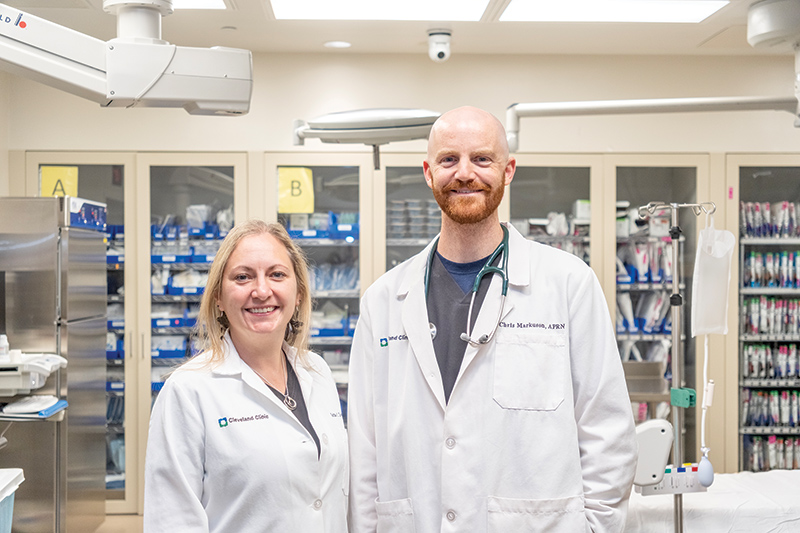
Cleveland Clinic Tradition Hospital in Port St. Lucie launched a STEMI program late last month and during a one-week period treated three patients that they would have otherwise had to transfer.
Prior to its debut, patients with STEMI – or ST-Elevation Myocardial Infarction – were sent to Cleveland Clinic Martin North. STEMI is a severe heart attack caused by a complete blockage of blood flow. It requires a rapid diagnosis and treatment to improve outcome and reduce damage to the heart muscle.
“We’re expanding access to emergency cardiac care for Treasure Coast residents, so more patients can receive timely treatment close to home,” said Chirag Choudhary, MD, MBA, vice president and chief medical officer of Cleveland Clinic Tradition, North and South hospitals. “When someone is having a heart attack, every minute counts. Our STEMI program helps ensure patients can get lifesaving care quickly, while also benefiting from the expertise and resources of Cleveland Clinic.”
The program follows two years of a rise in more complex cardiac cases at the hospital. Preparation for the introduction included system-wide education for ICU and floor nurses, as well as critical-care staff less familiar with cardiac patients.
Eight new cardiology physicians and six advanced-practice providers were hired between 2025 and the time of the STEMI program beginning. The hiring was intended to meet growing community needs and to ensure the hospital had the staff to provide the advanced cardiac services.
“Tradition-based cardiovascular interventionists are ready to apply first-line treatment including percutaneous coronary intervention (PCI) and balloon angioplasty,” said Dr. Jaime Lewellyn, medical director, interventional cardiology at Cleveland Clinic Martin Health.
“It’s really exciting to offer the service to the community. It’s a long time coming and a central location to be able to manage the sickest patients.”
Lewellyn spent 15 years as a paramedic in Raleigh, North Carolina prior to following her dream of going to medical school. Whenever she considered starting medical school, she would get promoted and stay. She is now six years out of training and has six years of practice. Interventional cardiology training takes seven years after medical school.
But it was all for the best as skills learned as a paramedic are a benefit to the program at Tradition. “I’m very familiar with the EMS side of it. I think it helps me understand how the patients are presenting. I think it makes me a better communicator for our team,” she said, adding that she has also partnered with the fire departments in St. Lucie and Okeechobee counties.
Although Tradition Hospital had an interventional cardiac catheterization lab, it lacked a dedicated call team and the resources needed to accept emergency cases.
Before introducing the program, the hospital enhanced its catheterization lab and expanded specialized training for staff. The lab is available with a dedicated team for 24/7 coverage.
New protocols that begin before a patient arrives at the hospital have been added. Electrocardiograms performed by EMS crews in the field can be transmitted directly to the emergency department, making it possible to identify a STEMI and activate the cardiac response team as quickly as possible.
“The program strengthens coordination across Cleveland Clinic Florida’s cardiovascular network,” said Dr. Jerry D. Estep, interim vice chief, Heart, Vascular and Thoracic Institute, Cleveland Clinic Florida, division chair of Cardiovascular Medicine, and the Eric and Lois Zorn Endowed Chair. “Patients who require cardiac surgery or need extended mechanical support or heart transplantation consideration can be rapidly transferred to the appropriate Cleveland Clinic facility, while many patients will be able to receive lifesaving STEMI intervention at Tradition Hospital.”