
Port St. Lucie experienced both successes and grating failures in a year filled with challenges between upgrading its waterways and keeping them sanitary.
The greatest failure this past year remains two fish kills the city incurred during the summer, one of them the worst in St. Lucie County since 2020. They occurred at the Elkcam Waterway in mid-June, and the Sawgrass Lakes gated community near Darwin Boulevard in late August.
“It is important to note there were different circumstances and causes involved,” city communications director Scott Samples wrote in a Dec. 23 email.
The city had removed 6,358 aquatic carcasses from the 121-acre Sawgrass Lakes community when collection stopped Sept. 29, according to Samples. Tilapia – a non-native fish used for filtration in Floridian waterways – made up 6,208, or a 97.6 percent majority, of these dead organisms.
Many of these tilapia died due to infections from the streptococcus bacterium, according to biopsies performed at the Bronson Animal Disease Diagnostic Laboratory in Kissimmee. Samples added streptococcus infections are “a known cause of mass mortalities in tilapia” throughout the state.
Other disclosed causes for the Sawgrass Lakes culling included a possible blue-green algal bloom, according to previous city reports.
The Elkcam Waterway fish kill, meanwhile, led to the collection of approximately 750 fish; among them 450 (60 percent) tilapia, according to Samples. City records add the Eklcam incident emerged from the usage of herbicides by Aquatic Vegetation Control, Inc. (AVC), of Stuart to quell nearby invasive plants.
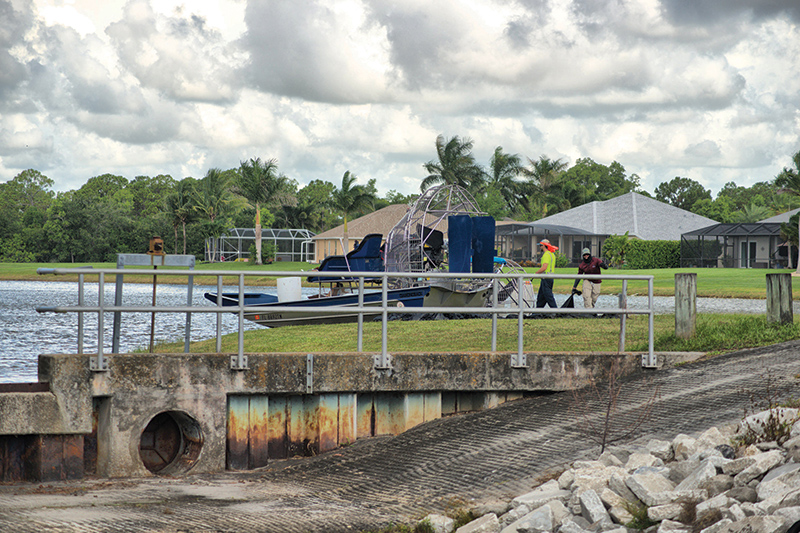
Contractors from AVC provided cleanup efforts after both fish kills, in addition to other wetland maintenance throughout the city and county, due to longtime municipal agreements.
The AVC contract with Port St. Lucie will expire Oct. 31, according to Samples. He added: “The city is currently working on establishing a framework for the new service contract that will be advertised.”
City staff and contractors routinely consider “other approaches” for the removal of invasive plants, Samples wrote. They span from the “physical” uprooting of non-native vegetation to “incorporating fish into waterways as a biological control.”
Samples added, “we work closely with AVC to identify the best removal approach to each unique area and situation.”
The city’s successes, meanwhile, leveraged continued efforts to improve its aging water infrastructure. Port St. Lucie signed off on new initiatives for cleanup including the nearly $340,000 contract Dec. 1 to remove floating sensors with encapsulated mercury in place since the city’s founding, records show.
The city also continues its efforts to convert residential septic tanks to modern sewer systems. Port St. Lucie Public Works logged 392 septic-to-sewer conversions from Oct. 1, 2024, to Sept. 30, 2025, according to Samples.
Public Works averaged 415 conversions per year throughout the past decade; over 12,000 residents are now connected to more secure sewer lines, Samples added.
The city installed at least one new baffle box to quell excess stormwater this year. The box found a home for $902,568.21 along the D-19 Canal near Whitmore Drive in June, city records show.
More plans lie ahead for two further baffle boxes to complement drainage along Floresta Drive, where construction crews continue building out the third phase of its improvement plan due to complete Fall 2028.
“The city will continue to focus on water quality initiatives involving the many waterways throughout Port St. Lucie,” Samples wrote.